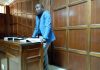
David Mokaya, a university student acquitted of charges in relation to a photo of President Ruto’s funeral procession post on X has sued Safaricom PLC for data breach.
Mokaya, a Moi University student, claims that Safaricom gave the DCI his personal data, leading to his arrest.
The student wants the court to issue a conservatory order restraining Safaricom whether by itself, servants, agents or any persons acting under its authority from transferring, sharing, disseminating or in any manner whatsoever divulging his personal data, call data records, subscriber information, location data or any metadata relating to him without his consent, or a lawful court order or in strict compliance with the constitution and applicable statutory framework.
According to Mokaya’s lawyers Danstan Omari, Shadrack Wambui and Martina Swiga, Safaricom gave the DCI his data without a court order, leading to his arrest.
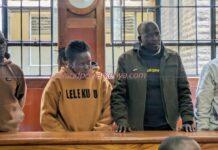
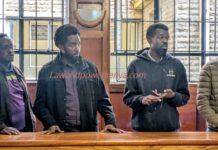
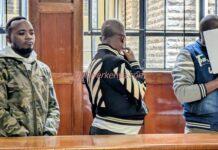
The applicant was arrested on 15th November 2024 in Eldoret, hauled to trial at Milimani Law Courts, prosecuted and went through the harrowing ordeal of a whole criminal trial.
“The basis of said trial was admittedly illegally obtained data
from the Respondent shared to law enforcement. The applicant neither consented to, nor knew what it would be used for,” Omari said.
According to court documents, given the insurmountable prejudice Mokaya has been put through, to wit, being subjected to a full criminal trial, putting on hold his education at Moi University, to constantly avail himself for the said proceedings since the year 2024, among other financial obligations arising therefrom, he is increasingly apprehensive that had his rights to privacy not been blatantly infringed upon, all the ill he suffered could have been foregone.
Shadrack Wambui noted that the same was admitted in court when Mr Hamisi, a witness from Safaricom PLC, confirmed that there was no valid court order allowing Safaricom to share his personal data.
This, according him, was a breach of his rights hence the move to sue the Telco giant at the High Court.
The Magistrate’s court found that the prosecution failed to discharge the burden of proof beyond reasonable doubt.